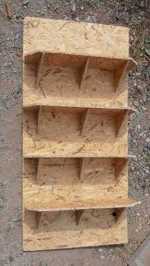
Basic Woodworking Tools
A hobbyist woodworker doesn't need too much tools neither too expensive ones. Here are the most important tools you need to obtain before starting averagely complex projects (like building a shed):
 Photo by John Loo  Photo by ikeX  Photo by blakeemrys |
|
That's basically all you need to get started. You can get cheap and simple tools at the beginning but don't hesitate to spend a little more for good sets or quality tools because they make the work easy and are cheaper long term.
Woodworking Safety Basics
Even the basic woodworking involves cutting and working with sharp and rough parts so you need to take some safety actions. Get safety equipment and protections - when possible protect your eyes with glasses and your hands with latex globes. When working with power tools make sure to disconnect power when you need to change a bit or blade. After you finish your work check for dropped nails and bits which can hurt you, kids or pets.
You may want to visit this site where you can learn more about woodworking safety.
Basic Woodworking Materials
In most of your woodworking projects you are going to use materials from the three main groups: hardwoods, softwoods and man-made materials.
When building a shed you will probably use hardwood or softwood material for the beams, the shed foundation and the wall frames and will use man-made materials for the covers and parts of the walls. Each of the materials has its specifics and often requires different tools and skills for working with it.
My advice is to learn a bit more about them. The hardwood is usually made of broad leaved trees, the softwood is from evergreen trees, while the man-made materials are made from people and you have for sure seen such - for example the plywood.
Basic Cuts In Woodworking
Cutting is the most often performed operation when working with wood material. That's why you need at least a couple of good saws. Let's see what are the most important cuts:
| 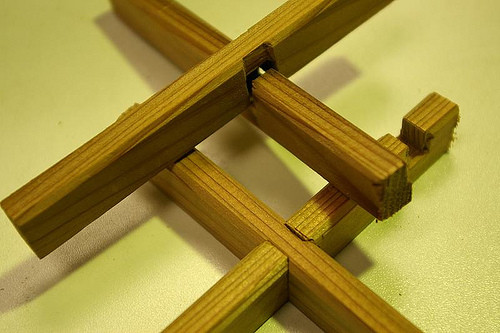 Photo by hifumiyo |
When building a garden shed you are likely to use 2-3 of the most common cuts, but if you are interested in knowing more, I strongly recommend you this site which has great explanations and pictures of all types of cuts.
Basic Woodworking Joints
The parts of wood material that you have cut almost always need joining. That's why knowing how to make joints is one of the most important skills in woodworking. Most joints are relatively easy to make especially if you practice a little. If you are about to make a joint for a first time, better use some waste parts (for example ones from your first cutting efforts).
There are many types of woodworking joints, but as a beginner you will need just a few. Most common is the Butt joint which involves joining together two members usually with some reinforcement. The Dado / Housing Joint has three sides and involves a cut into the surface of one of the members and plugging the other one into it. One of the important joints in shed building is the finger joint in which you make "fingers" in both joining members. It's not possible to cover all these joints in this material (trying to keep it short), so I recommend you learning more about them from Wikipedia.
Finishing Works
There are many other operations, like wood turning for example, that I have not discussed here because they may require some more advanced skills. But even a basic woodworking project rare can be completed without doing some finishing works:
- Probably the first step is sanding with the sand paper. Different types of sandpapers need to be used depending on the wood smoothness and rough areas.
- Most woods will also require staining so the end product can sustain humidity and different weather conditions.
- Painting/Finishing is not always necessary - many woodworking products will look good having the original wood color. But in many other cases you will want to apply various rich and beautiful colors.
When finishing, keep doors and windows open because most paints and stains are toxic. Allow at least 24 hours after finishing works before you start using the end product.
Even the basics of woodworking is a pretty large topic and can't be well covered in one short article. But I have provided you enough links to other sites which can help you get started. If you are excited to know even more, I can strongly recommend you this great book
 from Amazon.
And let me know when you get started!